Facing heart surgery is often a frightening experience. For decades, the standard approach required opening the chest, leading to long, painful recoveries. Medical advancements have introduced a highly effective alternative. Robotic heart surgery offers a minimally invasive option that is changing how patients experience cardiac care.
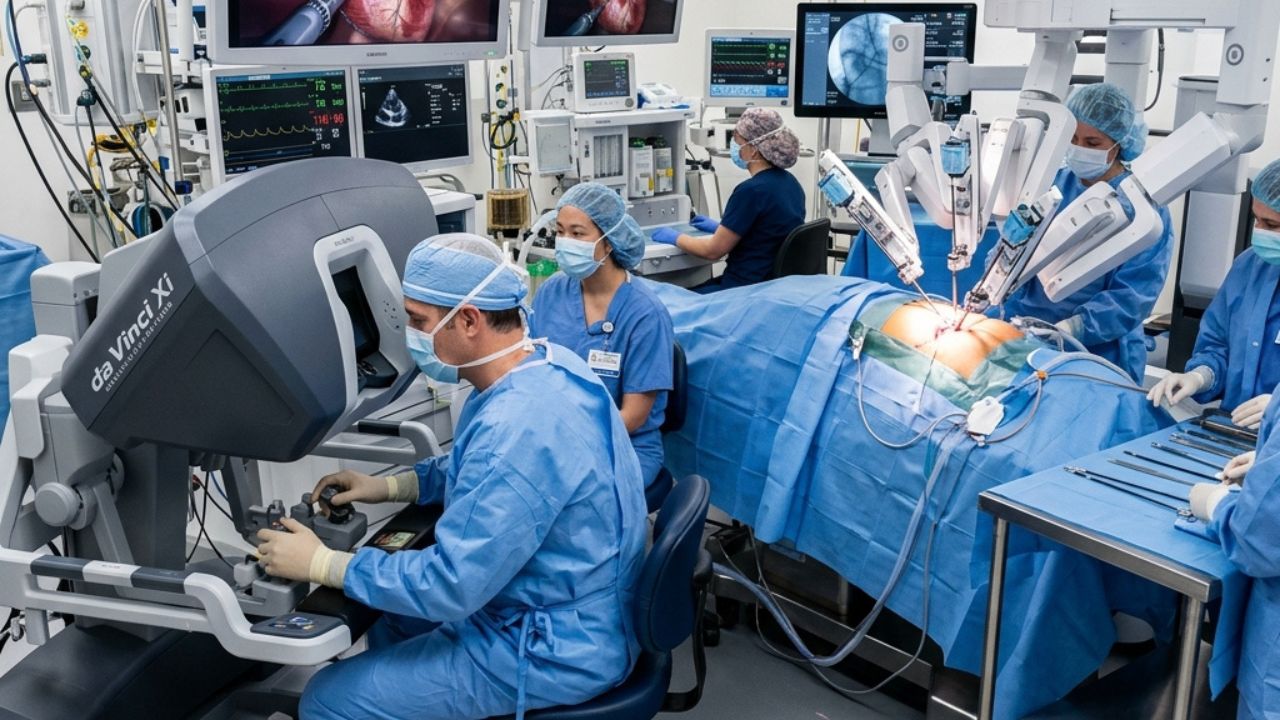
During robotic heart surgery, a surgeon uses a computer console to control surgical instruments attached to robotic arms. This technology provides a high-definition, magnified, 3D view of the surgical site. The surgeon’s hand movements translate into precise micro-movements of the instruments inside the patient’s chest. Because this method only requires a few small incisions between the ribs, it entirely avoids splitting the breastbone.
The advantages over traditional open-heart surgery are significant. Patients typically experience less pain, reduced blood loss, and a lower risk of infection. The recovery time is also much shorter. Many patients return to their normal daily activities in weeks rather than months. As awareness of these benefits grows, the demand for robotic cardiac procedures continues to rise rapidly.
Choosing the right facility and surgical team is the most critical decision you will make. This guide explores the best hospitals in the USA for robotic heart surgery, examining costs, success rates, and what to expect during your journey to recovery.
Factors to Consider When Choosing a Hospital
Not all hospitals offer the same level of care or expertise in robotic heart surgery. The robot is simply a tool; the outcome depends entirely on the skill of the team operating it. Here are the key factors you should evaluate.
Surgeon’s Experience and Specialization
The most crucial element of a successful robotic heart surgery is the surgeon’s experience. You want a surgeon who has performed hundreds, if not thousands, of these specific procedures. High-volume surgeons encounter fewer complications because they have seen and managed a wide variety of anatomical variations. Ask potential surgeons about their specific case volume for your exact condition.
Hospital’s Success Rates and Patient Outcomes
Look for hospitals that transparently publish their success rates and patient outcomes. High-volume centers often track metrics like infection rates, readmission rates, and 30-day mortality rates. A top-tier hospital will proudly share these statistics and compare them favorably against national averages.
Technology and Equipment
Robotic surgical technology evolves rapidly. The best hospitals invest heavily in the latest robotic systems, such as the newest generations of the da Vinci Surgical System. Up-to-date equipment ensures the surgeon has access to the most advanced imaging and instrument articulation available.
Cost and Insurance Coverage
Robotic surgery can be expensive. It is vital to understand what your insurance covers and what your out-of-pocket expenses might be. Look for hospitals with dedicated financial counselors who can help you navigate insurance claims and provide transparent cost estimates upfront.
Patient Support and Aftercare
Recovery does not end when you leave the operating room. Comprehensive care programs that include cardiac rehabilitation, nutritional counseling, and mental health support contribute significantly to long-term success. Evaluate the hospital’s aftercare programs before making your decision.
Top Hospitals in the USA for Robotic Heart Surgery
Several medical centers across the United States have distinguished themselves as leaders in robotic cardiac care. While many excellent facilities exist, the following hospitals consistently rank at the top for their expertise, volume, and outcomes.
Cleveland Clinic (Cleveland, Ohio)
Overview and reputation
Cleveland Clinic has ranked as the number one hospital for cardiology and heart surgery in the United States for decades. Their Sydell and Arnold Miller Family Heart, Vascular & Thoracic Institute is a global destination for patients seeking complex cardiac care.
Key specializations in robotic heart surgery
They are heavily recognized for robotic mitral valve repair, atrial septal defect closure, and robotic-assisted coronary artery bypass grafting (CABG). Their team has pioneered many of the techniques used worldwide today.
Success rates and patient testimonials
Cleveland Clinic boasts a near 100% success rate for robotic mitral valve repairs. Patients frequently highlight the seamless coordination of care and the astonishingly fast recovery times compared to open-heart alternatives.
Estimated cost range and financial aid options
While costs vary based on insurance, major cardiac procedures can range from $80,000 to over $150,000 before coverage is applied. Cleveland Clinic offers extensive financial assistance programs, including payment plans and charity care for eligible patients.
Unique programs or features
The clinic features a specialized multidisciplinary team approach. Every patient’s case is reviewed by a board of cardiologists, surgeons, and imaging specialists to ensure robotic surgery is the absolute best path forward.
Mayo Clinic (Rochester, Minnesota)
Overview and reputation
Mayo Clinic is globally renowned for its patient-centered approach and cutting-edge research. Their cardiovascular surgery department is consistently ranked among the very best in the nation.
Key specializations in robotic heart surgery
Mayo Clinic excels in robotic procedures for valve disease, removing cardiac tumors, and treating arrhythmias. They are particularly skilled in complex cases that other centers might deem inoperable.
Success rates and patient testimonials
Mayo Clinic’s surgical outcomes are exceptional, with low complication rates and high long-term survival rates. Testimonials often focus on the extreme empathy of the nursing staff and the clear, honest communication from the surgical team.
Estimated cost range and financial aid options
Costs are comparable to other top-tier national institutions. Mayo Clinic provides detailed cost estimates upon request and employs dedicated patient account representatives to help navigate insurance benefits and financial aid applications.
Unique programs or features
Mayo Clinic operates on a unique integrated model. All testing, consultations, and surgeries can often be completed in a highly condensed timeframe, which is incredibly beneficial for out-of-state or international patients.
Cedars-Sinai Medical Center (Los Angeles, California)
Overview and reputation
Located in Southern California, Cedars-Sinai is a powerhouse in cardiac care and research. The Smidt Heart Institute is famous for performing more adult heart transplants than any other US medical center, and their robotic program is equally prestigious.
Key specializations in robotic heart surgery
The hospital has a highly active robotic mitral valve repair program and is a leader in minimally invasive treatments for atrial fibrillation, utilizing robotic assistance for precise ablation procedures.
Success rates and patient testimonials
Cedars-Sinai reports excellent clinical outcomes, with patients often leaving the hospital just three to four days after surgery. Patients frequently praise the state-of-the-art facilities and the personalized attention they receive.
Estimated cost range and financial aid options
Being in a major metropolitan area, base costs can be high. However, they accept a wide array of insurance plans and offer robust financial assistance and counseling services to mitigate out-of-pocket burdens.
Unique programs or features
They offer a dedicated cardiac rehabilitation facility on-site that integrates the latest sports medicine research to help heart surgery patients regain their strength and stamina quickly safely.
NYU Langone Health (New York, New York)
Overview and reputation
NYU Langone Health has rapidly expanded its robotic surgery capabilities and consistently ranks among the top hospitals for cardiology and heart surgery in the Northeast.
Key specializations in robotic heart surgery
Their robotic cardiac surgery team focuses heavily on mitral valve repairs, tricuspid valve repairs, and septal myectomies.
Success rates and patient testimonials
NYU Langone is known for excellent surgical metrics and a very low rate of conversion to open surgery. Patients appreciate the modern hospital environment and the highly responsive communication from the medical staff.
Estimated cost range and financial aid options
Costs align with major New York medical centers. NYU Langone offers comprehensive financial counseling to help patients understand their liability and secure appropriate financial assistance if needed.
Unique programs or features
They utilize an advanced enhanced recovery after surgery (ERAS) protocol. This program optimizes nutrition, pain management, and mobility before and immediately after surgery to accelerate healing.
Understanding the Cost of Robotic Heart Surgery
Robotic heart surgery is a major financial investment. Understanding the breakdown of these expenses can help you prepare and avoid surprise medical bills.
Breakdown of Typical Costs
The total cost of your procedure is not just one bill. It includes several different components:
- Pre-operative Costs: Consultations, echocardiograms, blood tests, and CT scans.
- Surgical Costs: The surgeon’s professional fee, the anesthesiologist’s fee, and the cost of using the robotic equipment and operating room.
- Post-operative Costs: Intensive care unit (ICU) stays, general hospital room charges, and medications.
- Rehabilitation: Outpatient physical therapy and cardiac rehab programs.
Factors Influencing Cost Variations
Costs vary wildly depending on your geographic location, the specific hospital you choose, the complexity of your heart condition, and how many days you need to spend in the hospital recovering.
Insurance Coverage and Navigating Claims
Most major health insurance providers, including Medicare, cover robotic heart surgery if it is deemed medically necessary. However, you must confirm that both your surgeon and the hospital are in-network. Always request a prior authorization from your insurance company before scheduling the surgery.
Financial Assistance Programs and Payment Plans
If you face high deductibles or are uninsured, do not panic. Almost all major non-profit hospitals offer financial assistance programs based on household income. Additionally, hospitals usually provide interest-free payment plans to help you manage the balance over time.
Success Rates and What They Mean for You
When researching hospitals, you will encounter various statistics regarding success rates. Understanding how to read these numbers is essential.
Interpreting Success Rate Statistics
A “success rate” usually refers to the percentage of patients who survive the surgery and the critical 30-day post-operative period without major complications. For procedures like robotic mitral valve repair, top hospitals often achieve success rates of 98% to 99%.
Factors Contributing to High Success Rates
High success rates are the result of rigorous patient screening, highly experienced surgical teams, dedicated cardiac anesthesiologists, and specialized ICU nursing staff. Hospitals that perform a high volume of robotic surgeries consistently produce better outcomes.
Patient Selection and Eligibility Criteria
Not everyone is a candidate for robotic surgery. If you have severe arterial calcification, have had previous chest surgeries, or suffer from certain lung conditions, traditional surgery might be safer. High success rates partly rely on surgeons correctly identifying which patients will benefit most from the robotic approach.
Preparing for Robotic Heart Surgery
Proper preparation can significantly impact your surgical outcome and the speed of your recovery.
Pre-operative Evaluations and Lifestyle Adjustments
Before surgery, you will undergo extensive testing to map your heart and ensure you are healthy enough for anesthesia. Your doctor will likely ask you to stop smoking immediately, adjust certain medications (like blood thinners), and focus on a healthy diet to prepare your body for the physical stress of surgery.
What to Expect During the Hospital Stay
After the operation, you will wake up in the Intensive Care Unit. You will have several tubes and monitors attached to you, which is completely normal. Most robotic surgery patients transition out of the ICU to a regular step-down room within 24 hours. The entire hospital stay usually lasts between three to five days.
Recovery and Rehabilitation Process
Recovery is a gradual process. You will be encouraged to walk shortly after surgery to prevent blood clots and pneumonia. Once discharged, you will slowly increase your daily activities. Many patients are cleared to drive and return to desk jobs within three to four weeks.
Life After Robotic Heart Surgery
The ultimate goal of robotic heart surgery is to return you to a normal, active life.
Long-term Outlook and Quality of Life
For the vast majority of patients, the long-term outlook is incredibly positive. Conditions like severe fatigue, shortness of breath, and chest pain are often resolved entirely. Patients frequently report a massive improvement in their overall quality of life and energy levels.
Follow-up Care and Monitoring
You will have several follow-up appointments with your surgeon and cardiologist to monitor your healing. Regular echocardiograms will ensure your heart is functioning correctly and the surgical repair remains intact.
Support Groups and Resources
Healing is emotional as well as physical. Participating in cardiac support groups, whether in-person or online, connects you with others who have gone through the exact same experience. This community can provide invaluable advice and emotional comfort during your recovery journey.
Next Steps for Your Cardiac Care
Choosing to undergo heart surgery is a major life event. Selecting a facility with a proven track record in robotic cardiac procedures can drastically improve your surgical experience, minimize your pain, and get you back to your life sooner.
As technology continues to advance, robotic heart surgery will become even more precise and widely available. By prioritizing surgical experience, evaluating transparent success rates, and understanding the financial aspects of care, you can make a highly informed decision about your health.
If you have been diagnosed with a heart condition that requires surgery, take action today. Research the top hospitals in your region, contact their cardiovascular departments, and schedule a consultation to find out if robotic heart surgery is the right choice for you.